Magnesium Glycinate vs. Citrate vs. Oxide: An Absorption Guide
A plain-English comparison of magnesium glycinate, citrate and oxide — absorption, stomach tolerance, dosage and which form suits sleep and stress support.
March 9, 2026 · 4 min read
Two magnesium supplements can list the same milligrams and behave nothing alike. The difference is the compound — what the magnesium is bound to — because that determines how much your body absorbs and how the rest of it treats your gut.
Elemental magnesium is the number that matters
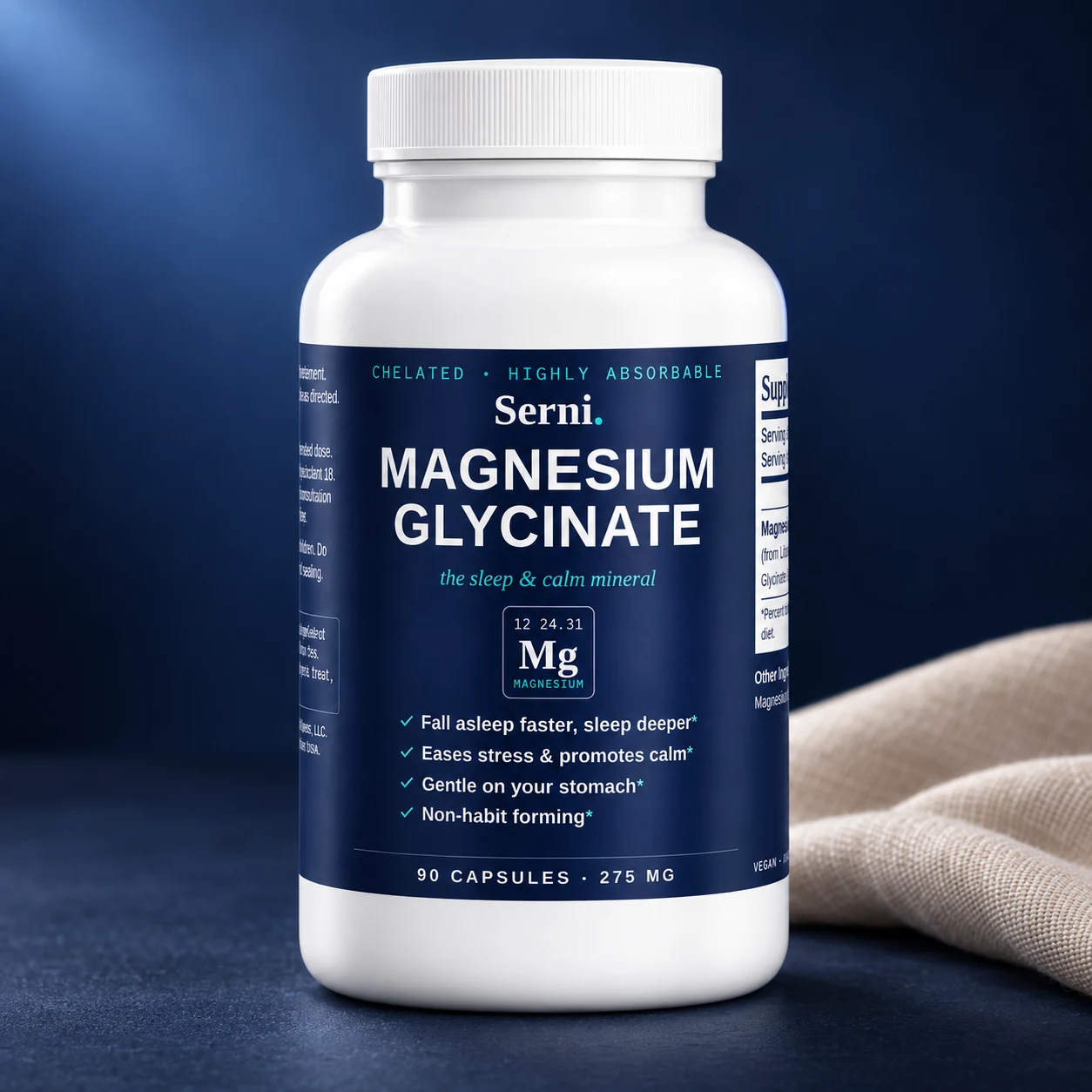
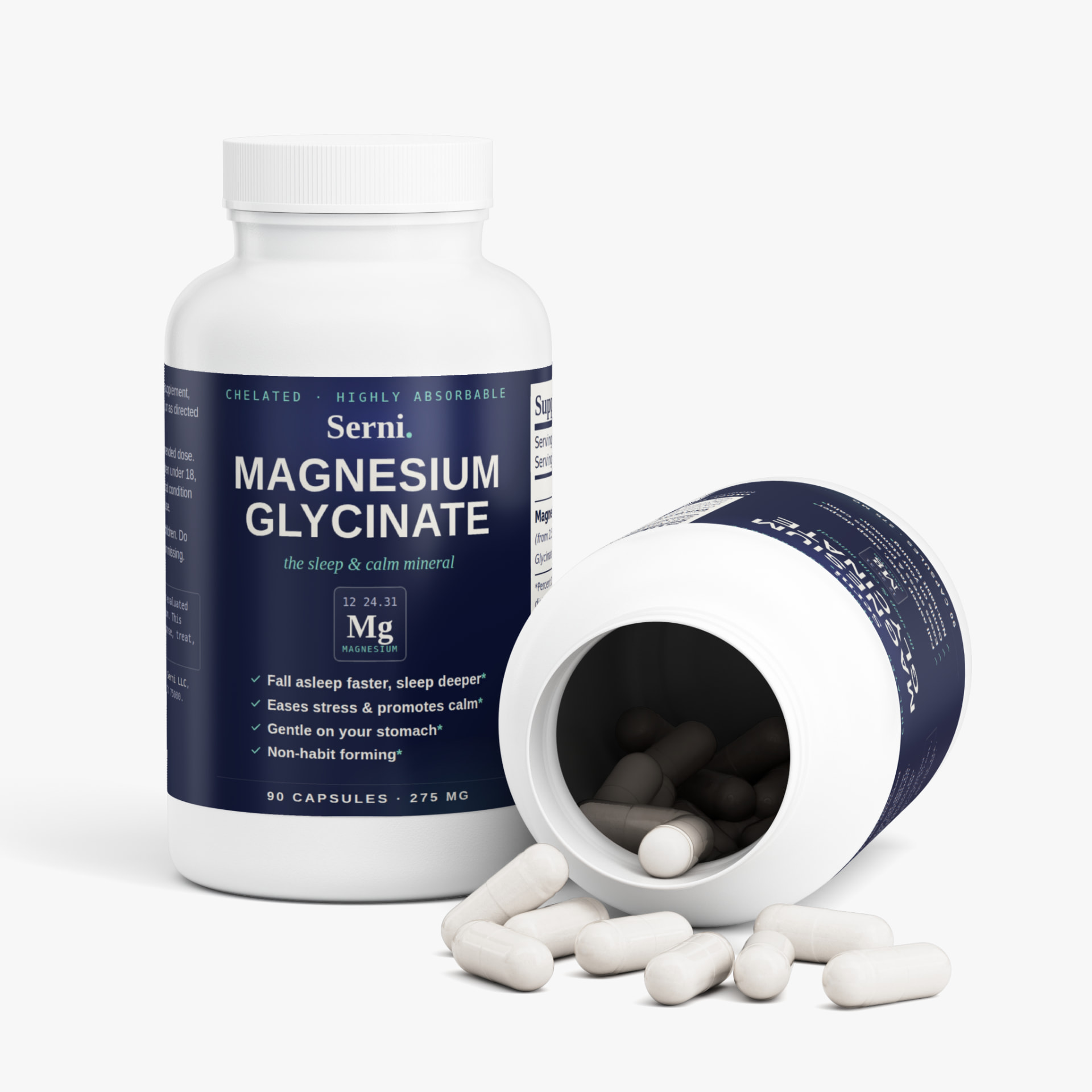
A label reading 2,500 mg of magnesium glycinate isn't 2,500 mg of magnesium. Most of that weight is glycine. Serni's 2,500 mg of magnesium glycinate provides 275 mg of elemental magnesium — 65% of the Daily Value — which is the figure worth comparing across brands.
The three forms, side by side
- Glycinate: chelated to glycine, high bioavailability, gentle. Favoured for sleep, stress and everyday calm support.*
- Citrate: decent absorption, but it draws water into the intestine — which is precisely why it's also sold as a laxative.
- Oxide: the cheapest to manufacture, poorly absorbed, and the form most often behind stomach upset.
How to choose
If your goal is nightly sleep and stress support with no bathroom surprises, glycinate is the straightforward pick. Look for a clean label, a stated elemental magnesium amount, third-party testing, and a serving size you'll actually keep taking.
*These statements have not been evaluated by the Food and Drug Administration. This product is not intended to diagnose, treat, cure, or prevent any disease.